Drawing Portraits with Confidence: Overcoming Common Mistakes and Challenges
Posted on 11-10-2024 09:49 μμ
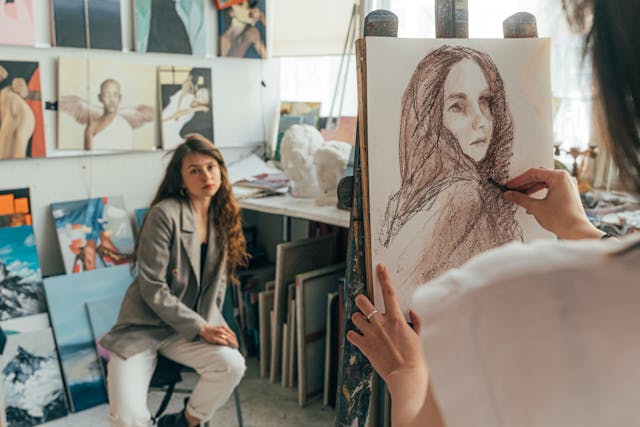
Have you ever struggled to capture the likeness of a person's face in your drawings? Do you feel frustrated when your portraits don't resemble those they should represent? If so, you are not alone. Drawing portraits can be challenging, but with practice and the proper techniques, you can improve your skills and create stunning works of art.
In this blog post, we will explore common mistakes and challenges that artists face when drawing portraits and tips for overcoming these obstacles and building confidence as an artist. Let's get started!
Introduction to Drawing Portraits - Portrait malen lassen
Drawing portraits is a skill that takes time and practice to master. To begin, it helps to understand the essential elements of a picture. These include the eyes, nose, mouth, ears, hair, and facial structure. Each feature must be rendered accurately to create a realistic and lifelike portrait.
Common Mistakes and Challenges in Drawing Portraits
One of the most common mistakes artists make when drawing portraits is failing to proportion the face properly. The eyes, nose, and mouth should be aligned correctly to create a balanced and symmetrical composition. Another challenge is capturing the essence of a person's character or personality in their portrait. This requires careful observation and understanding of how different facial features work together to convey emotion and expression.
How to Overcome these Challenges and Improve your Skills
You can use several techniques to overcome these challenges and improve your skills. One helpful tip is to study photographs of faces and pay attention to how light falls on different face areas. This can help you better understand how shadows and highlights create depth and dimension in a portrait. Additionally, practicing sketching exercises such as blind contour and gesture drawing can help you develop eye-hand coordination and improve your ability to quickly and accurately capture likenesses.
Tips for Capturing the Essence of a Person's Face
When creating a portrait, capturing the unique qualities of the subject's face is essential. Please pay close attention to the shape of their eyes, nose, and mouth and any distinctive features such as freckles or moles. It also helps to consider the overall mood or atmosphere you want to convey in the portrait. For example, you may render the subject with soft lines and gentle curves to capture a sense of serenity or calmness. On the other hand, if you want to convey energy or intensity, you might use bold strokes and strong contrasts.
Techniques for Rendering Facial Features Accurately
Rendering facial features accurately requires a combination of technical skill and creative interpretation. Start by establishing the basic shapes of the face, including the jawline, cheekbones, and forehead. Then, refine those shapes using subtle variations in tone and texture to suggest depth and volume. When rendering individual facial features such as the eyes, nose, and mouth, focus on correcting the proportions and using appropriate tonal values to create a sense of three-dimensional form.
Conclusion: Building Confidence as an Artist
Drawing portraits can be challenging, but with patience, persistence, and the proper techniques, anyone can improve their skills and create stunning works of art. By focusing on the fundamental elements of a portrait and practicing specific exercises designed to build skill and confidence, you can become a more accomplished artist and achieve tremendous success in all aspects of your artwork.
From Basic Shapes to Masterpiece: A Guide to Drawing Faces
Welcome to my guide on how to draw a portrait! In this post, we will cover everything you need to know to create stunning photographs that capture the essence of your subject. From basic shapes and forms to mastering light and shadow, I'll walk you through each step of the process so that you can achieve excellent results. Let's get started!
Introduction to Drawing Faces
Drawing faces can be intimidating initially, but with practice and patience, anyone can learn to do it well. The key is to break down the face into simple shapes and forms and then build them into a realistic representation of your subject. By following these steps, you can create beautiful portraits in no time!
Basic Shapes and Forms of the Face
The first step in drawing a face is understanding the basic shapes and forms of the human head. These include:
Oval: This shape represents the overall structure of the head, including the jawline and chin.
Cylinder: This shape represents the neck, which connects the head to the body.
Sphere: This shape represents the forehead, cheeks, and nose.
Cones: These shapes represent the ears, which protrude from the side of the head.
Capturing Facial Features and Proportions
Once you understand the basic shapes and forms of the face, you can start capturing your subject's unique features. Here are some tips for getting proportions right:
Eyes: The eyes should be positioned roughly halfway between the top of the head and the bottom of the chin. They should also be placed slightly higher than the center of the oval shape.
Nose: The bridge of the nose should line up with the middle of the eye socket, while the tip of the nose should fall along the vertical axis of the mouth.
Mouth: The corners of the mouth should align with the midpoint of the earlobe.
Light, Shadow, and Depth in Portraiture
One of the most critical aspects of creating a realistic portrait is capturing how light falls on the face. To do this, you'll want to pay attention to shadows and highlights, as well as the depth created by the contours of the face. Here are some tips for working with light and shadow:
Highlights: Look for areas where the light hits the face directly and creates bright spots. These can be found on the brow bone, cheekbones, and tip of the nose.
Midtones: These areas receive indirect or diffused light and provide much of the detail in the portrait.
Shadows: Areas turned away from the light source will appear darker and more shadowy. Pay close attention to the direction of the light when placing shadows.
Final Touches for a Masterpiece - Portrait zeichnen lassen
Once you have captured all the essential elements of the face, it's time to add those final touches that bring your portrait to life. Here are some ideas:
Add texture: Use cross-hatching or blending techniques to add texture to the skin, hair, and clothing.
Refine details: Adjust the placement of facial features like eyebrows, lips, and nostrils to ensure they look natural.
Deepen colors: Use complementary colors to deepen shadows and give the portrait greater depth.
And there you have it - a complete guide to drawing faces! With these tips and techniques, you'll be well on your way to creating stunning portraits that capture the beauty and personality of your subjects.